Hospital in the Home
Hospital-level care, delivered at home with clinical support you can trust.
Hospital in the Home, often called HITH, helps eligible patients receive some types of hospital-level care in the comfort of their own home. It can support people who are ready to leave hospital earlier, or who need short-term clinical care at home instead of staying in hospital.
Lumia Care provides nurse-led Hospital in the Home services in partnership with hospitals, health services, insurers, referrers and care teams. Our role is to help make the move from hospital to home safe, clear and well supported.
If you are a patient, family member or carer, your treating doctor, hospital team or referrer will help decide whether Hospital in the Home is suitable for you.
1300 004 484
What is Hospital in the Home
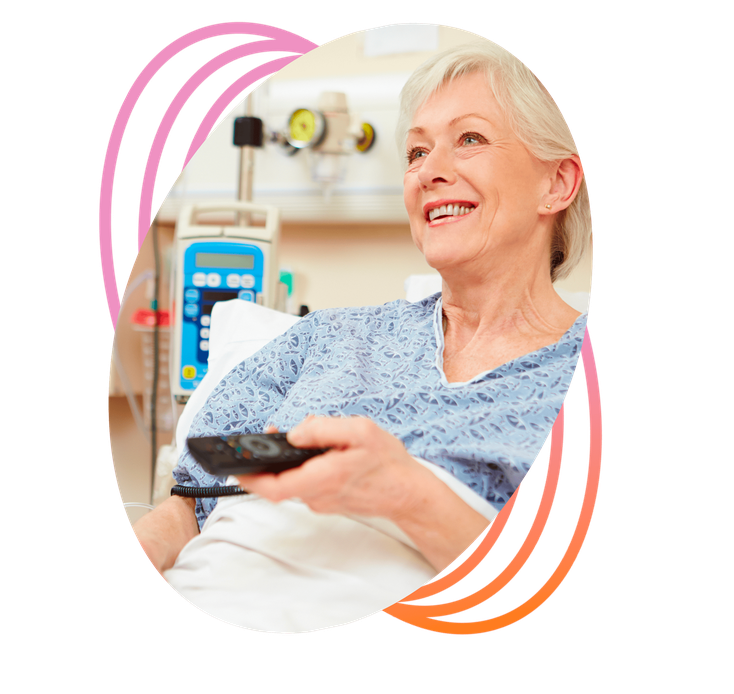
Hospital in the Home is short-term clinical care delivered in a person’s home or usual place of residence.
It may include nursing visits, monitoring, medication support or other clinical care that would otherwise happen in hospital. The type of care depends on the person’s health needs, care plan and referral.
Hospital in the Home is not the same as general home care. It is clinical care that must be planned, approved and monitored by the right health professionals.
Who Hospital in the Home may help
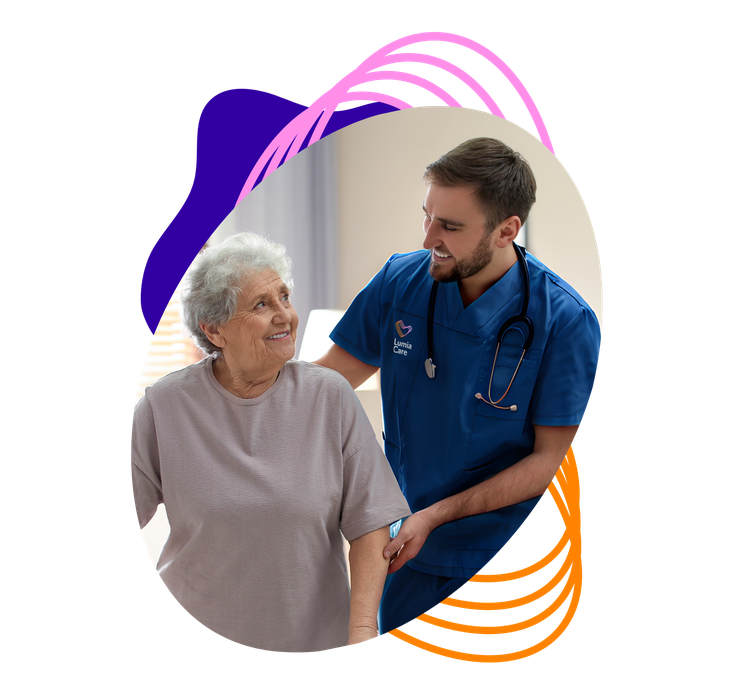
Hospital in the Home may be suitable for people who:
are medically stable enough to receive care at home
need short-term clinical nursing or monitoring
have been referred by a hospital, health service, insurer or treating clinician
have a safe home environment for care to be delivered
have a care plan that can be safely managed outside hospital
It may support people after a hospital stay, surgery, illness or treatment, depending on clinical approval.
A person’s eligibility will always depend on their condition, care needs, home environment, location, funding and clinical assessment.

How it works
Hospital in the Home usually starts with a referral or enquiry from a hospital, health service, insurer, case manager, treating clinician, patient, family member or carer.
After a referral or enquiry is received, Lumia Care follows five clear steps:

Referral or enquiry
A referral or enquiry is sent to Lumia Care. This may include information about the person’s health needs, location, treating team, funding pathway and the type of care requested.

Suitability check
We review the information and check whether Hospital in the Home may be safe and suitable. This includes the person’s care needs, home environment, location and the availability of suitably qualified staff.

Care plan created
If the referral is accepted, we confirm the care plan, visit requirements, communication pathway and any information needed before care starts.

Care begins
We arrange the first visit or next step. Our team provides care in line with the agreed care plan and keeps the referrer or care team updated, as agreed.

Ongoing review
We continue to review the person’s care needs and progress. If needs change, we update the referrer or care team so the care plan can be adjusted or another care option can be considered.
When Hospital in the Home may not be suitable
Hospital in the Home is not suitable for every person or every condition.
It may not be suitable if a person:
needs urgent or emergency care
is medically unstable
needs continuous hospital monitoring
does not have a safe environment for care at home
needs equipment, staffing or treatment that cannot be safely provided at home
has not been approved or referred for this type of care
If someone is very unwell, has sudden or severe symptoms, or you are worried about their immediate safety, call Triple Zero (000) or go to the nearest emergency department.
Hospital in the Home does not replace emergency care.

What patients and families can expect
If Hospital in the Home is arranged for you or someone you care for, the care team should explain:
what care will be provided
who will visit and when
how often visits will happen
what equipment or medicines may be needed
what you need to prepare before the first visit
who to contact with questions
what to do if symptoms change or get worse
You can ask questions at any time. It is important that you understand the care plan and feel comfortable with what will happen at home.
Our Services

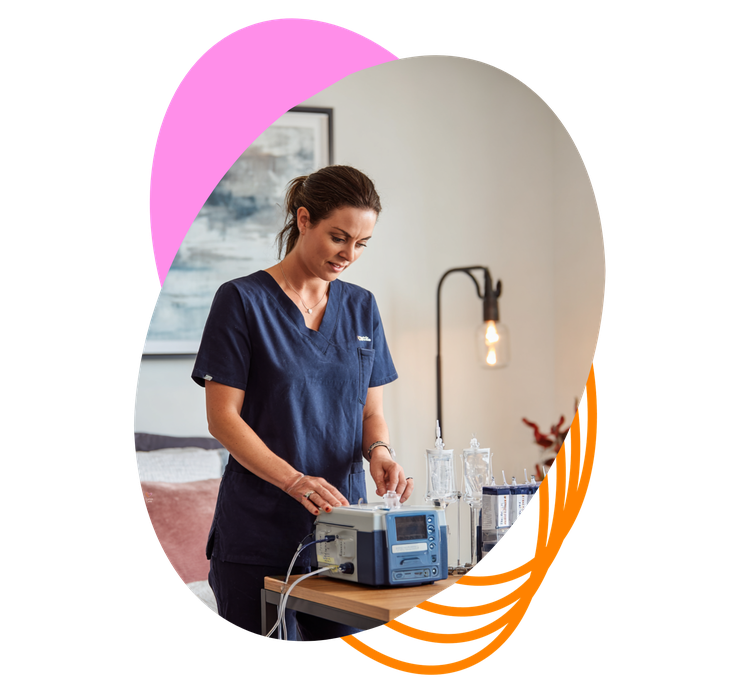
Intravenous medication and infusion therapy
Medicines or fluids given through a vein, such as intravenous (IV) antibiotics or prescribed infusions.

Blood-thinning medicine support
Support with medicines used to help prevent or manage blood clots.

Cannula and central line care
Care for cannulas and central lines, including peripherally inserted central catheters (PICC lines).

Complex Wound Care
Support for surgical wounds, dressing changes, surgical drains and negative pressure wound therapy (NPWT).

Diabetes support
Insulin administration and blood glucose monitoring.

Pain management support
Support to manage ongoing or post-surgical pain at home.

Catheter and Continence Management
Care for catheter use and continence support.

Feeding tube support
Support with nutrition through a feeding tube.

Palliative and end-of-life care (EOLC)
Compassionate care focused on comfort, dignity and support.

Overnight care and respite
Overnight or short-term care to support the person and their carers.

Health assessments and care plan reviews
Health checks and updates to the person’s care plan.

Personal care and daily living support
Help with everyday tasks such as washing, dressing and meals.

Hospital discharge and care coordination
Support to move safely from hospital to home.

Transport support
Help getting to hospital or medical appointments.

Around-the-clock home care and support
Extended personal or clinical support after hospitalisation.
What to prepare before care starts
Before the first visit, it may help to have:
hospital discharge papers or referral information, if you have been given them
a current medication list
contact details for the treating doctor, hospital or referrer
any relevant care instructions
a clean, safe space for care to be provided
a support person available, if this has been recommended
Your care team will let you know if anything else is needed.

Frequently Asked Questions
How Can We Help?
Let Lumia Care be your partner in providing Hospital in the Home and palliative care at home to you or your loved one. Reach out to us to learn more about how we can support you and your family in living life to the fullest.
We have a simple and easy onboarding process, and staff available in most locations across Australia. We can start supporting you and your loved ones straight away!